Rustic Wood Serving Board About
-
-
Material: Typically made from a variety of wood types, such as acacia, bamboo, olive wood, or other hardwoods. The choice of wood can influence the platters durability, appearance, and maintenance requirements.
-
Construction: Wooden platters are crafted by shaping and smoothing the wood to create a flat, even surface. Some may have raised edges or handles for easy carrying.
-
Finish: The surface of the wooden platter may be treated with food-safe finishes, such as mineral oil or beeswax, to enhance its appearance and protect the wood. This also makes the platter more resistant to stains and odors.
-
Versatility: Wooden platters are versatile and can be used for serving a variety of foods, including cheeses, charcuterie, fruits, bread, and more. They are popular for entertaining guests and adding a touch of natural elegance to table settings.
-
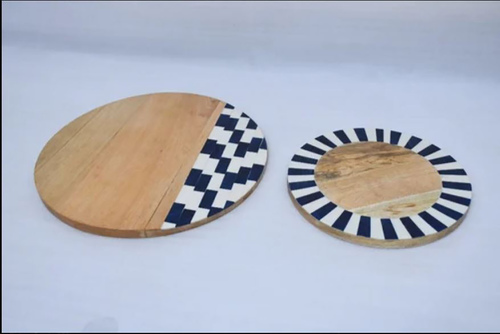
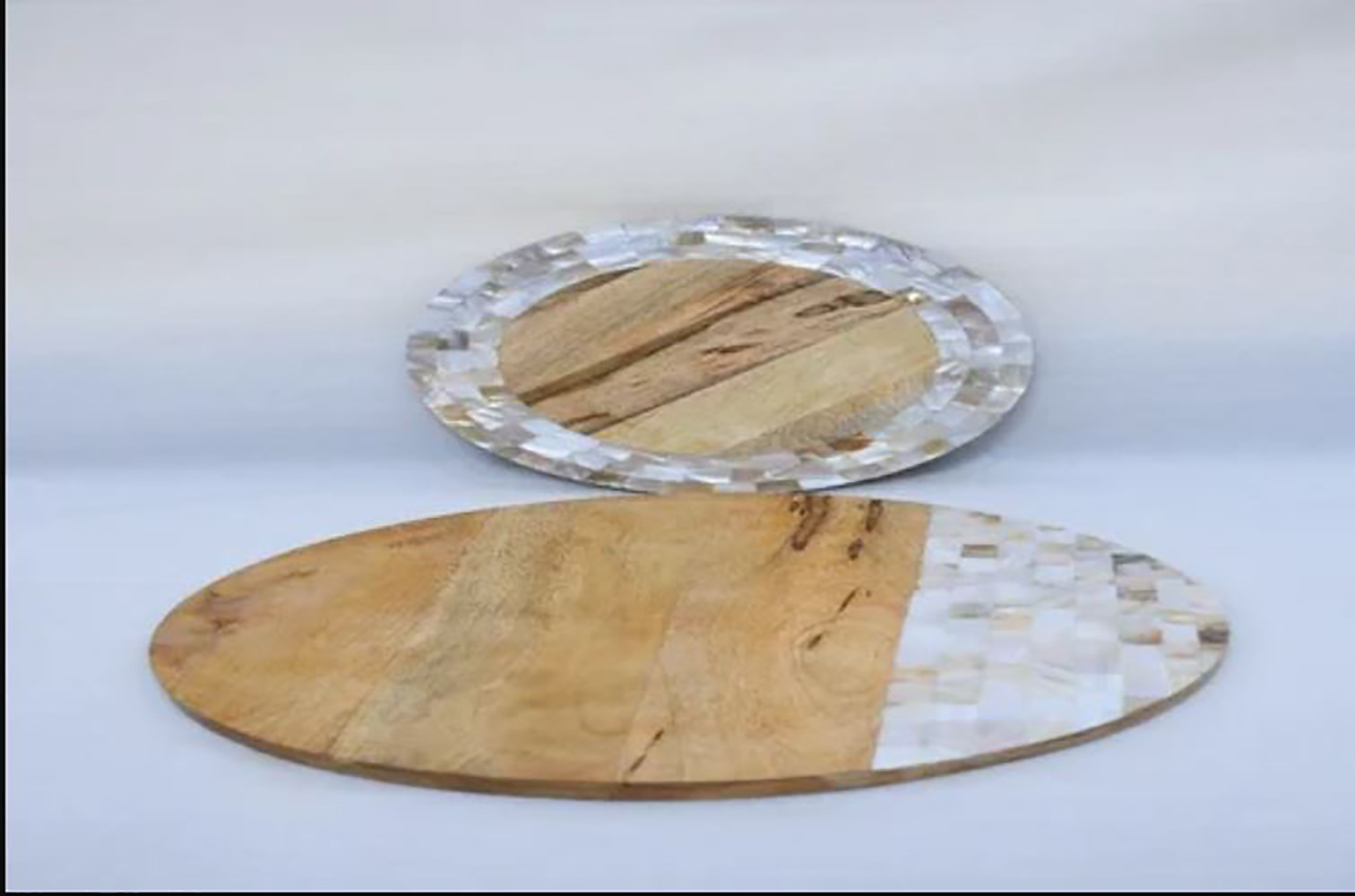
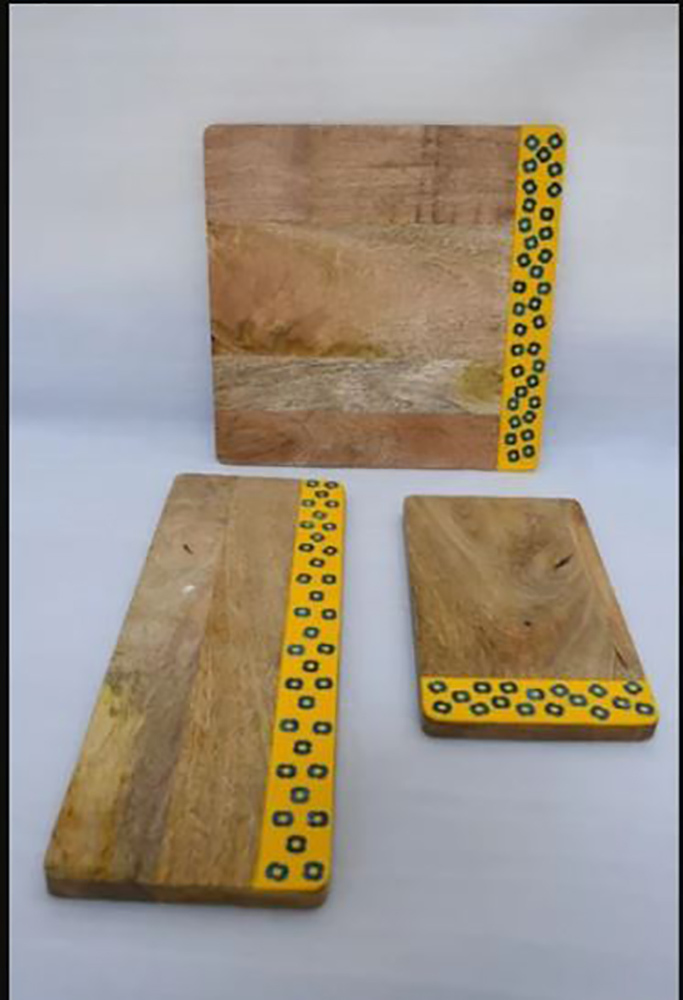
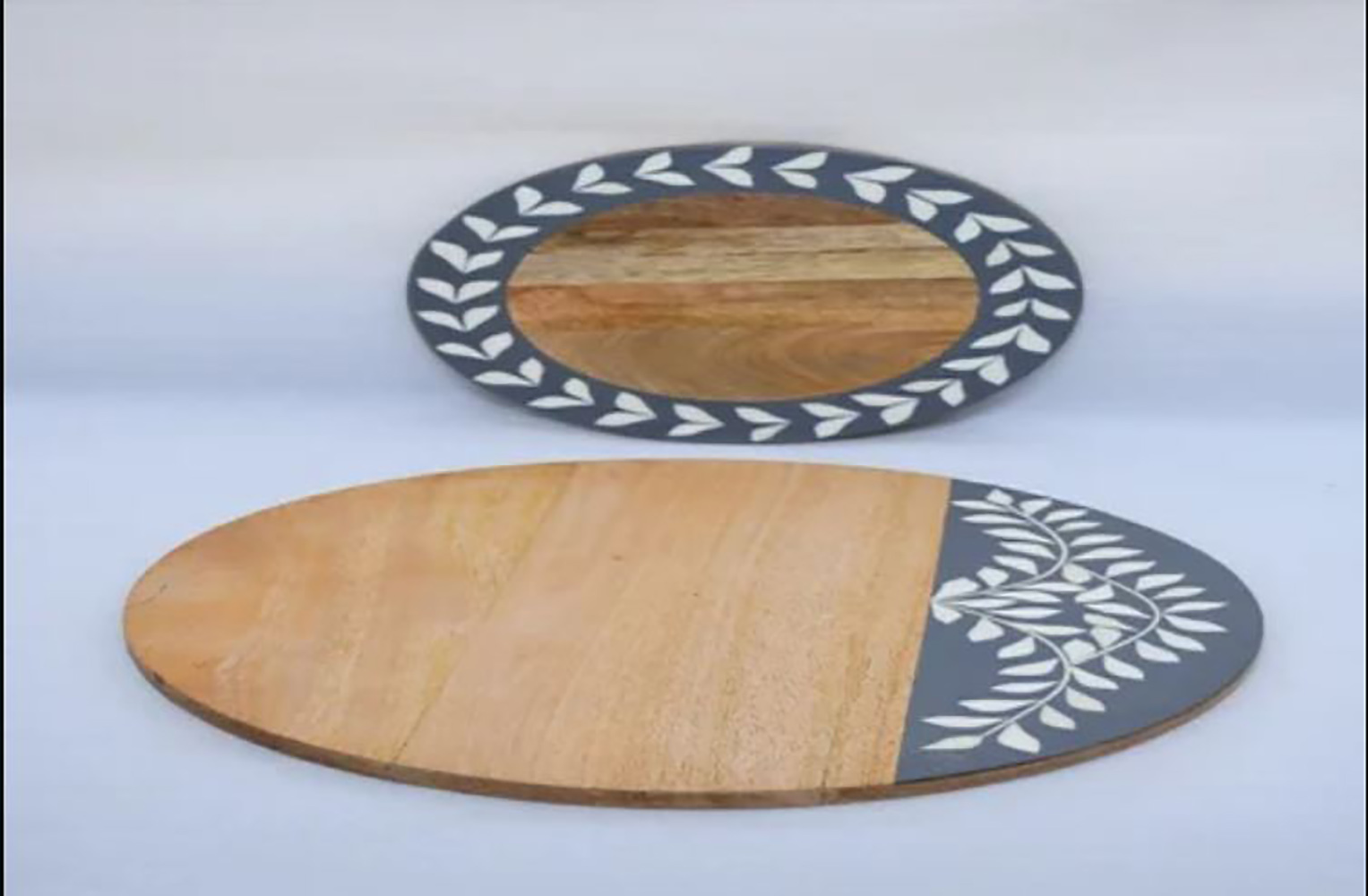
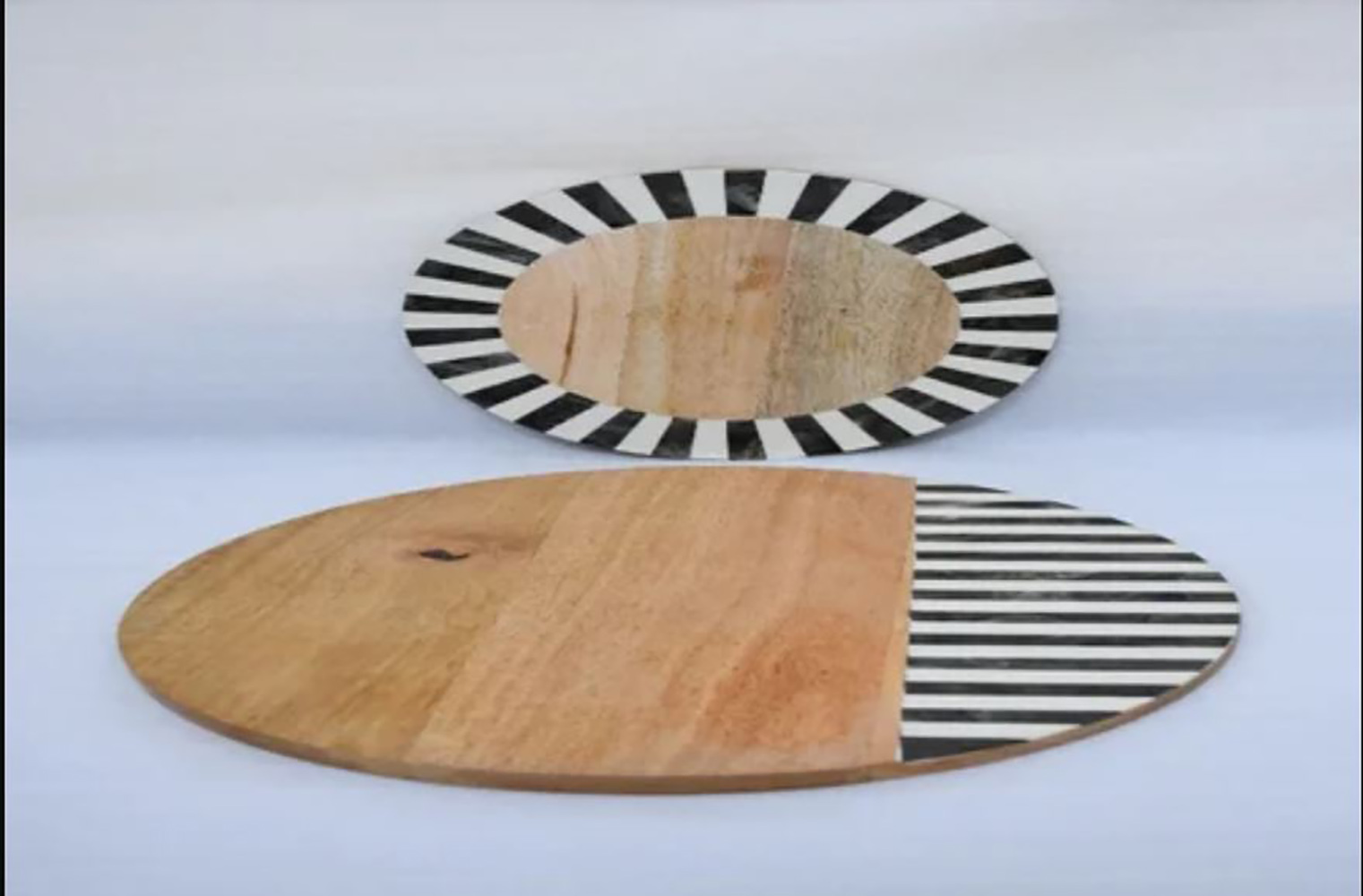
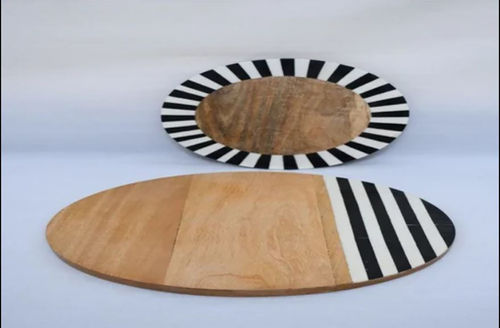
Aesthetics: The natural grain and color variations of the wood contribute to the aesthetic appeal of wooden platters. They can range from light and pale to dark and rich tones, providing a warm and inviting presentation.
-
Maintenance: Wooden platters require special care to maintain their appearance and prevent damage. It is essential to hand wash them with mild soap and warm water, avoiding prolonged exposure to moisture and extreme temperatures.
-
Decorative Element: In addition to their functional purpose, wooden platters often serve as decorative items in kitchens and dining areas. They can complement various styles, from traditional to modern, and add a rustic or natural touch to the decor.
-
Environmentally Friendly: Choosing wooden platters made from sustainably sourced materials supports environmentally friendly practices. Many manufacturers prioritize using responsibly harvested wood to minimize their impact on the environment.
Sustainably Sourced & Eco-FriendlyCreated using wood from responsibly managed forests in India, this serving board reflects our commitment to environmental sustainability. The eco-friendly construction and food-safe finish ensure youre serving with style and a conscience, making it a perfect choice for eco-aware hosts and culinary professionals.
Versatile Rustic EleganceShowcase breads, cheeses, appetizers, or charcuterie in rustic style. Its slightly irregular smooth edges and natural matte surface highlight the beauty of real wood, enhancing your table setting for gatherings both casual and refined. The boards integrated wood handle provides easy handling and presentation.
Care & MaintenanceTo keep your serving board in top condition, oil it regularly to prevent drying and preserve the woods lustrous appeal. Hand-wash only and never soak or place in the dishwasher. Avoid exposure to excessive moisture and heat above 80C, ensuring long-lasting performance and beauty.
FAQs of Rustic Wood Serving Board:
Q: How should I clean and care for the rustic wood serving board?
A: For optimal care, hand-wash the board with mild soap and water, and immediately dry it. Avoid soaking or using the dishwasher. Regularly apply food-grade oil to maintain moisture and prevent drying.
Q: What wood is used in this serving board and how is it sourced?
A: The board is crafted from solid Acacia or Beech wood, sustainably sourced from responsible forestry operations in India. This ensures the products environmental friendliness and structural integrity.
Q: Can this board be used for cutting as well as serving food?
A: Yes, the board serves both as a presentation platter and a cutting surface, suitable for bread, cheese, appetizers, and charcuterie, thanks to its sturdy construction and food-grade finish.
Q: Does the serving board have a non-slip base for stability?
A: No, the board does not include a non-slip base. However, its natural weight and thickness help provide adequate stability during usage on most surfaces.
Q: Is personalization available on this rustic wood serving board?
A: Personalization is offered on request, allowing you to add unique touches such as names, logos, or messages for gifting or branding.
Q: What is the recommended method for storing the board?
A: Store the board by hanging it using the integrated handle hole for convenient and space-saving storage, or keep it flat in a dry area to preserve its rustic appeal.
Q: Why is oiling the board regularly beneficial?
A: Oiling helps retain the woods natural sheen, prevents cracking, and extends the boards usability, ensuring your serving piece remains attractive and functional over time.


 Send Inquiry



 Send Inquiry
 Send Inquiry
 Send SMS


 English
 Spanish
 French
 German
 Italian
 Chinese (Simplified)
 Japanese
 Korean
 Arabic
 Portuguese