About silver Haldi-Kumkum jars
A silver Haldi-Kumkum Karanda is much more than a simple vessel; it embodies centuries of cultural heritage, intricate craftsmanship, and symbolic significance. Traditionally used in Indian households, especially by married women, this vessel holds haldi (turmeric) and kumkum (vermilion), two essential elements in rituals, festivals, and ceremonies. The Karanda is not merely functionalit is a work of art, a spiritual symbol, and a decorative object that enhances the beauty of any sacred space.
A silver Karanda elevates the traditional ritual vessel into a luxurious and enduring artifact. Silver, renowned for its luster, purity, and auspiciousness, enhances the cultural and spiritual significance of the Karanda. Its reflective surface not only adds aesthetic beauty but also symbolizes clarity, purity, and divine energy. The handcrafted nature of the silver Karanda ensures that each piece is unique, featuring intricate motifs, patterns, and designs that reflect the artisans skill and dedication.
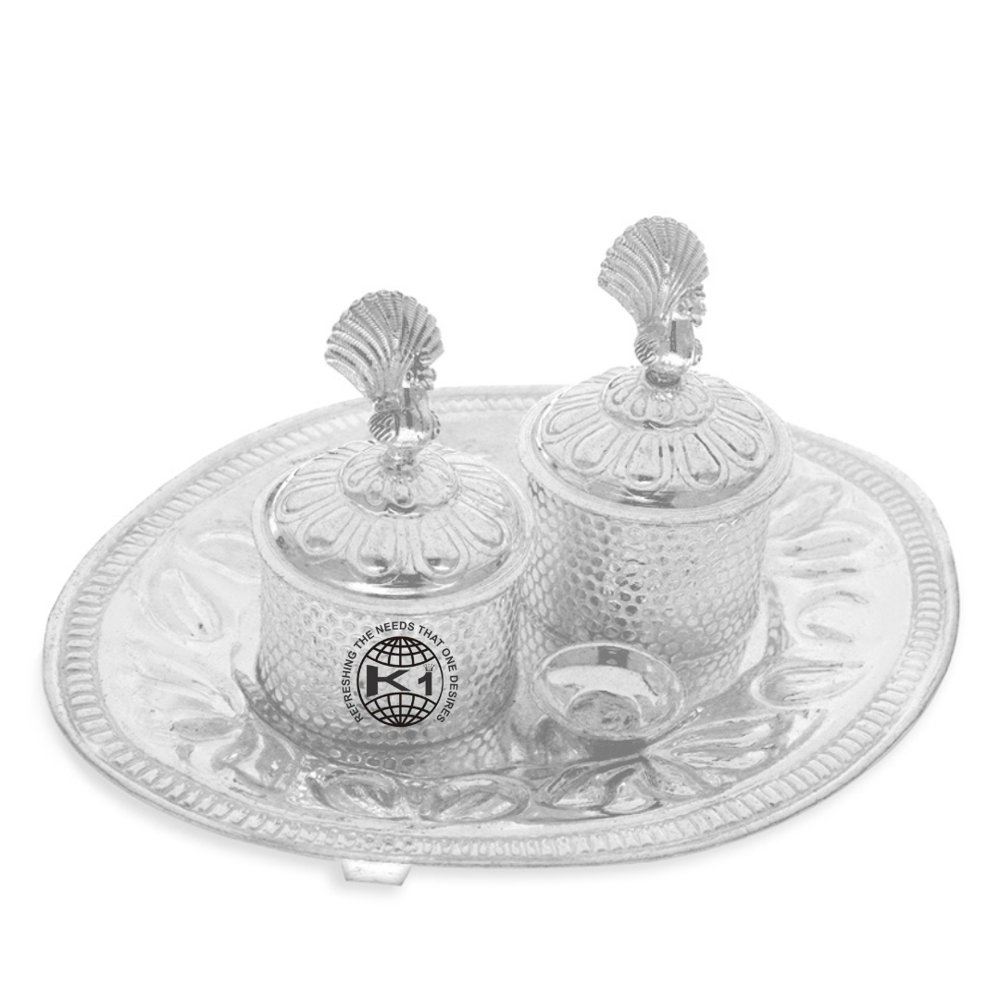
From its elegant body to its ornate lid and handles, the silver Haldi-Kumkum Karanda seamlessly blends functionality with visual sophistication. It is designed to hold sacred powders securely while offering easy access during rituals. The vessels form, whether simple and sleek or richly adorned with traditional motifs, captures the essence of Indian heritage while appealing to modern sensibilities.
Design and Aesthetic Appeal
The aesthetic appeal of a silver Haldi-Kumkum Karanda arises from its balanced combination of shape, ornamentation, and functional elegance. Artisans meticulously design each Karanda to harmonize traditional symbolism with visual beauty.
-
Shape and Structure:
The body of the Karanda is typically rounded, tapering slightly toward the base to ensure stability. The rim is flared or gently curved for easy handling, while the base is often reinforced to provide balance when the vessel is placed on surfaces. Many Karandas include a lid that complements the bodys curvature, sometimes adorned with a finial in the form of a lotus, dome, or other auspicious motif. Handles, if present, are elegantly curved and often incorporate detailed engravings or embossing, adding to the vessels ornate appeal.
-
Surface Ornamentation:
Silver Karandas are often embellished with intricate hand-engraved or embossed patterns. Traditional motifs include floral designs, paisleys, geometric patterns, and culturally significant symbols such as the swastika, lotus, or kalasha. The interplay of raised and recessed areas creates depth, adding visual richness. The reflective silver surface enhances these patterns, capturing light and producing a dynamic, shimmering effect.
-
Silver Finish:
The silver used in Karandas is polished to a high shine, offering a lustrous and reflective quality. Polishing highlights engraved patterns, accentuates contours, and gives the vessel an aura of purity and elegance. In some designs, artisans apply selective oxidation or antiquing to recessed areas, emphasizing patterns and adding depth while maintaining the brilliance of the high points.
-
Proportions and Balance:
A well-crafted Karanda exhibits proportional harmony, with the body, lid, and handles meticulously balanced to ensure both visual appeal and functional stability. The lid fits snugly to protect the contents, while the vessels dimensions allow it to hold an ample quantity of haldi and kumkum without becoming unwieldy. The proportions contribute to the vessels overall grace, ensuring it is both practical and aesthetically pleasing.
Materials and Craftsmanship
The choice of materials and the artisanal techniques employed define the quality and allure of a silver Haldi-Kumkum Karanda.
-
Base Material:
Traditionally, Karandas are crafted from pure silver or high-quality silver alloys. Pure silver is preferred for its auspiciousness, luster, and resistance to tarnishing. Some Karandas may be crafted with a copper or brass core and silver-plated for enhanced durability and cost-effectiveness, while maintaining the reflective beauty of silver.
-
Handcrafted Techniques:
Crafting a silver Karanda involves multiple meticulous steps:
-
Shaping: Artisans shape the body using techniques such as spinning, hammering, or casting to achieve a smooth, rounded form.
-
Engraving and Embossing: Skilled engravers create intricate patterns by hand, ensuring precise detailing and artistic consistency. Embossing adds dimensionality by raising certain motifs above the surface.
-
Polishing: The silver surface is polished to a reflective finish, highlighting patterns and contours.
-
Finishing Touches: Patinas or selective oxidation may be applied to recessed areas to enhance depth and visual interest.
The handcrafted nature ensures that each Karanda is unique, with subtle variations in pattern, texture, and form reflecting the artisans skill and creativity.
Symbolism and Cultural Significance
The silver Haldi-Kumkum Karanda holds profound cultural and spiritual symbolism in Indian tradition:
-
Haldi and Kumkum:
Haldi (turmeric) symbolizes purity, fertility, and prosperity, while kumkum (vermilion) represents marital bliss, energy, and auspiciousness. The Karandas role is central to rituals involving married women, particularly in welcoming guests, performing pujas, and participating in festivals like Karva Chauth, Varalakshmi Vratham, or Navratri.
-
Silver as an Auspicious Metal:
Silver is associated with the moon, purity, and positive energy. In ritual contexts, silver vessels are considered sacred and capable of amplifying spiritual vibrations. A silver Karanda thus elevates the ritual experience, infusing it with symbolic purity and divine energy.
-
Artistic Heritage:
Silver Karandas reflect centuries of Indian metalwork tradition, preserving techniques such as chasing, engraving, embossing, and repouss. Owning and using a handcrafted silver Karanda connects the user to this rich artisanal heritage, making it both a functional object and a cultural artifact.
Functionality and Practical Applications
While decorative, the silver Haldi-Kumkum Karanda is highly functional:
-
Storage and Ritual Use:
The vessel securely holds haldi and kumkum, ensuring that these sacred powders are kept clean and accessible during rituals. The lid protects contents from dust and moisture, while handles facilitate easy transport during ceremonies.
-
Decorative Display:
Karandas often serve as ornamental pieces in homes, displayed on altars, shelves, or ceremonial trays. The reflective silver surface enhances their visual appeal, capturing light and drawing attention to intricate motifs.
-
Gift Item:
Due to their symbolic significance and aesthetic beauty, silver Haldi-Kumkum Karandas make cherished gifts for weddings, anniversaries, festivals, and housewarmings. Their combination of utility and artistry ensures they are both meaningful and decorative.
-
Collectors Item:
Handcrafted silver Karandas are valued by collectors for their cultural significance, artisanal craftsmanship, and intrinsic material value. Each piece is unique, making it a timeless object of both functional and artistic appreciation.
Pure Silver CraftsmanshipManufactured from high-quality sterling silver, these Haldi-Kumkum jars bring traditional elegance to your pooja setup. The smooth, glossy finish and minimal etched patterns blend seamlessly with all decor styles, ensuring a timeless appeal at every function.
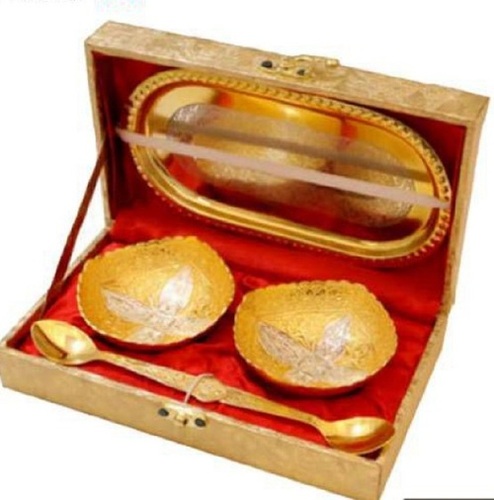
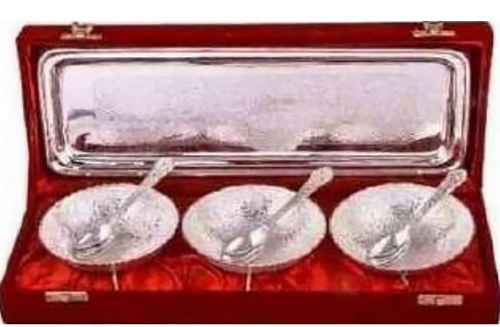
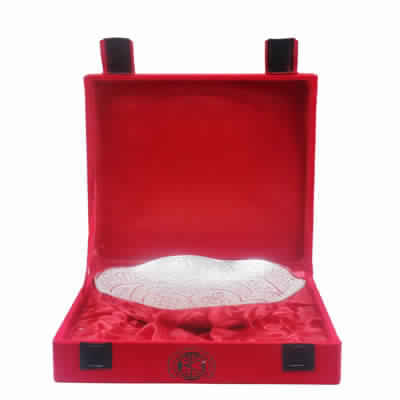
Versatile Gifting SolutionEach set, presented in an attractive box or pouch, makes an ideal choice for return gifts, wedding favors, or festive gifting. The compact and polished design embodies both practicality and sentiment, making it a cherished keepsake for any occasion.
Easy Maintenance & Lasting DurabilityThese silver jars are built for longevity, being both corrosion and tarnish resistant. To maintain their lustrous appearance, simply wipe them clean with a soft cloth after each use-no elaborate care required.
FAQ's of silver Haldi-Kumkum jars:
Q: How should I clean and maintain the silver Haldi-Kumkum jars?
A: To keep the jars looking their best, gently wipe them with a soft, dry cloth after use. Avoid using harsh chemicals or abrasive materials, as the jars feature a polished, lead-free finish that is easily maintained with simple care.
Q: What occasions are these jars suitable for?
A: These jars are perfect for housewarmings, religious ceremonies, festivals, and traditional pooja rituals. Their elegant appearance also makes them excellent gifts for weddings, festive celebrations, and as return favors.
Q: What is the storage capacity of each jar?
A: Each jar has a capacity of approximately 5-10 ml, making them ideal for holding small amounts of Haldi and Kumkum used during rituals and ceremonies.
Q: Can the jars be customized for special events?
A: Yes, customization is available upon request. You can contact the supplier or manufacturer with your specific requirements for personalized designs or packaging.
Q: Are these silver jars reusable and resistant to tarnishing?
A: Absolutely. Made from sterling silver, these jars are both reusable and resistant to tarnishing and corrosion, ensuring they remain attractive and functional over time.
Q: How does the detachable lid work?
A: Each jar features a detachable lid, allowing for easy access and spill-free storage of Haldi and Kumkum during traditional use.


 Send Inquiry




 Send Inquiry
 Send Inquiry
 Send SMS


 English
 Spanish
 French
 German
 Italian
 Chinese (Simplified)
 Japanese
 Korean
 Arabic
 Portuguese