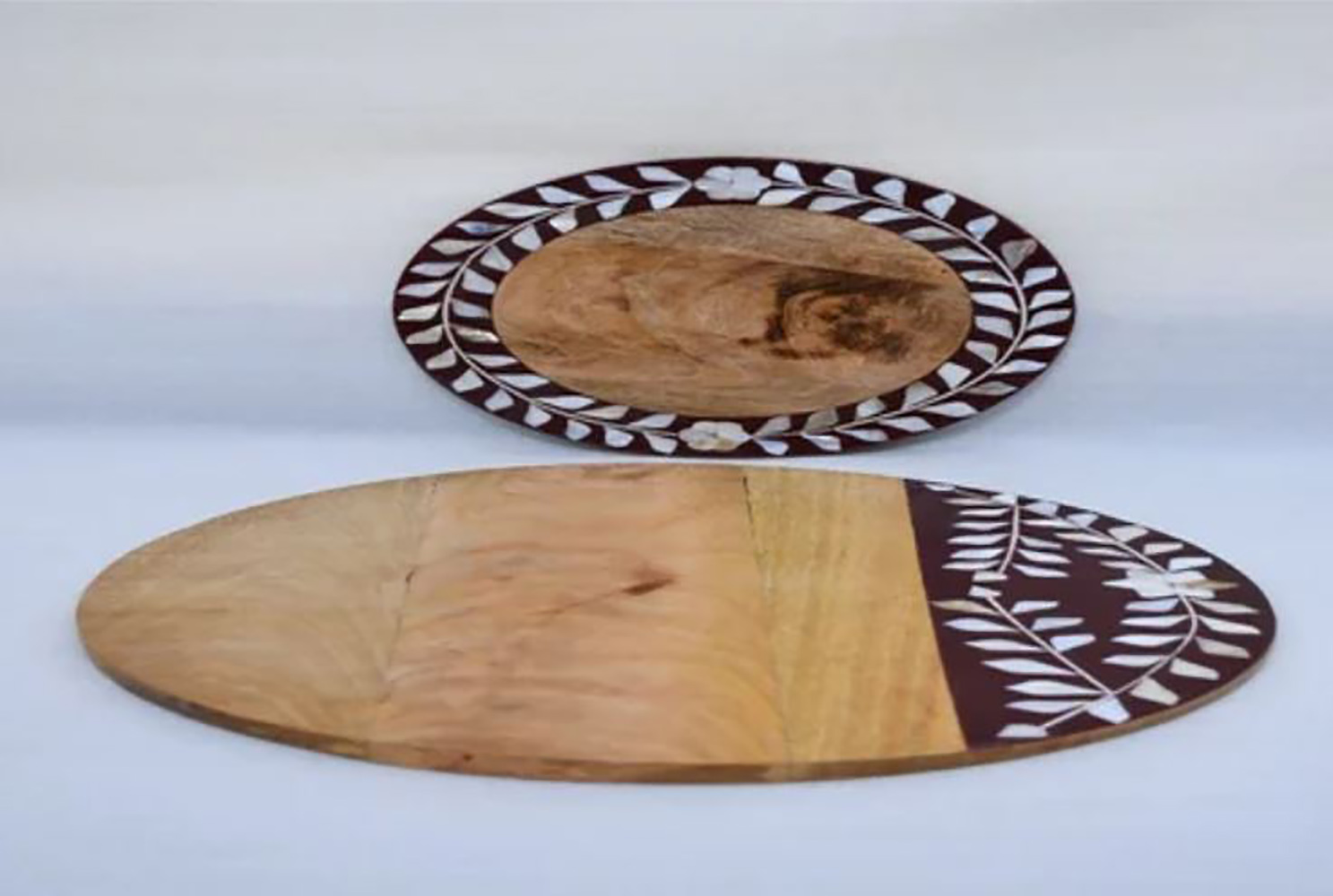
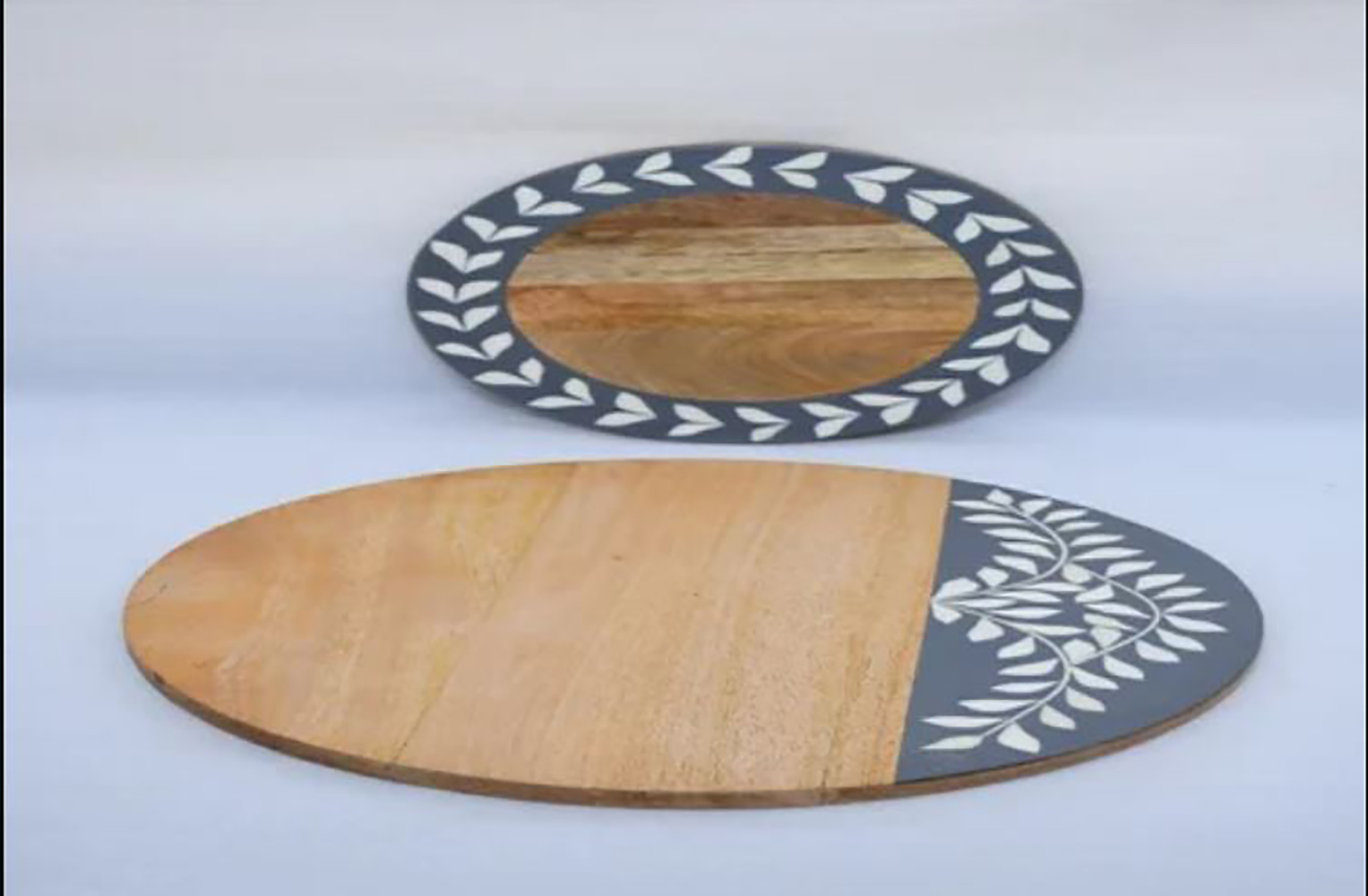
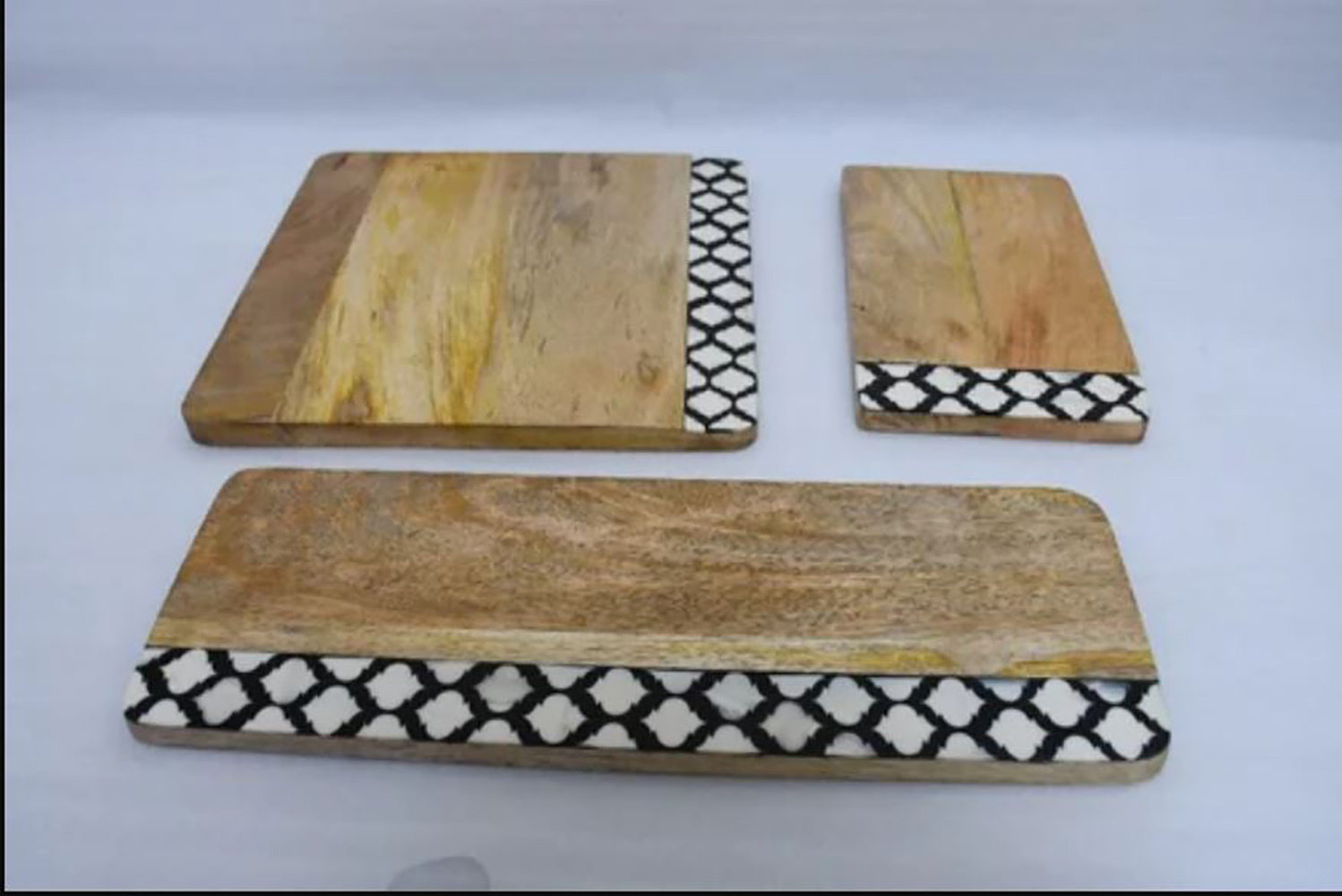
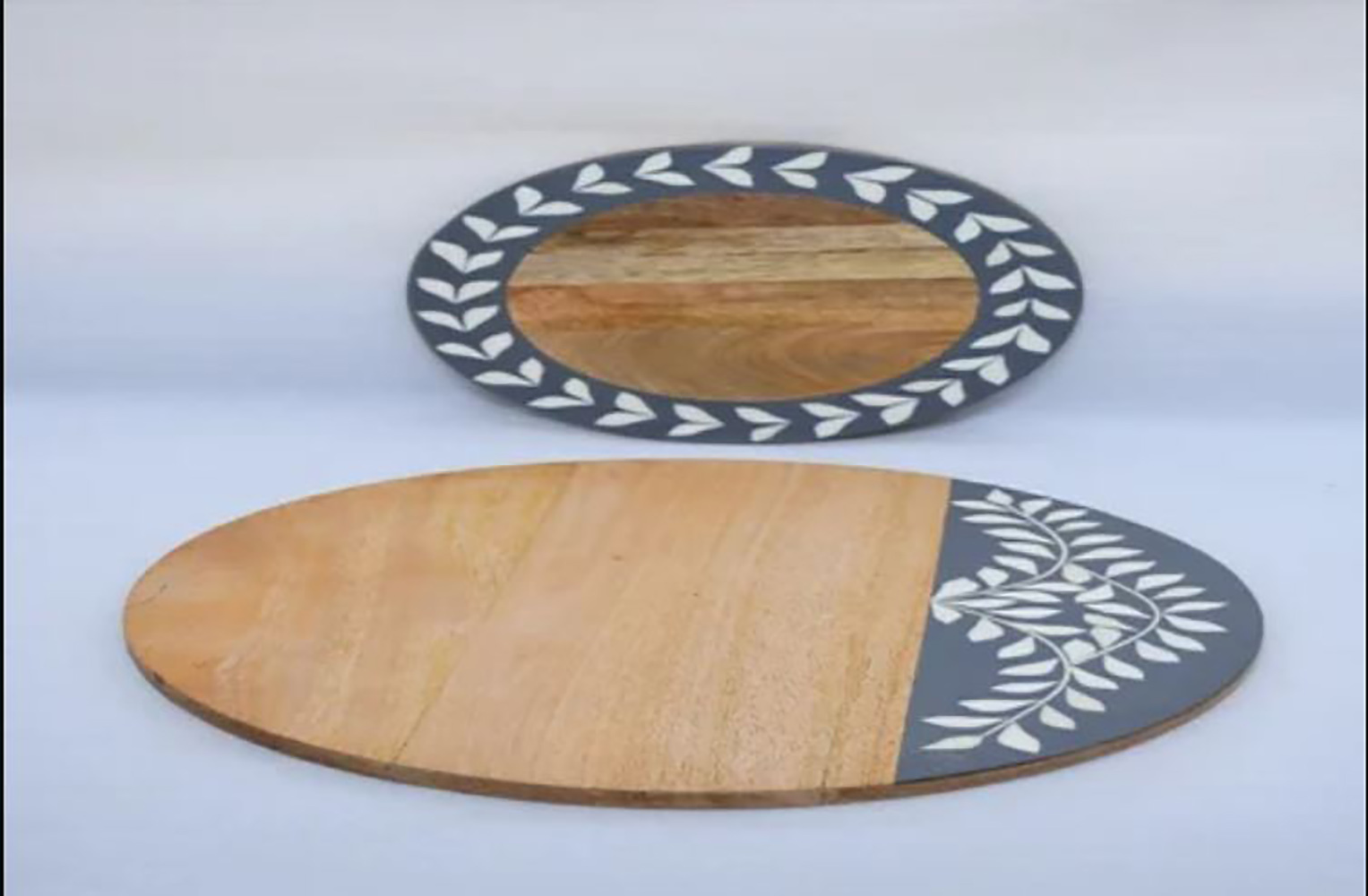
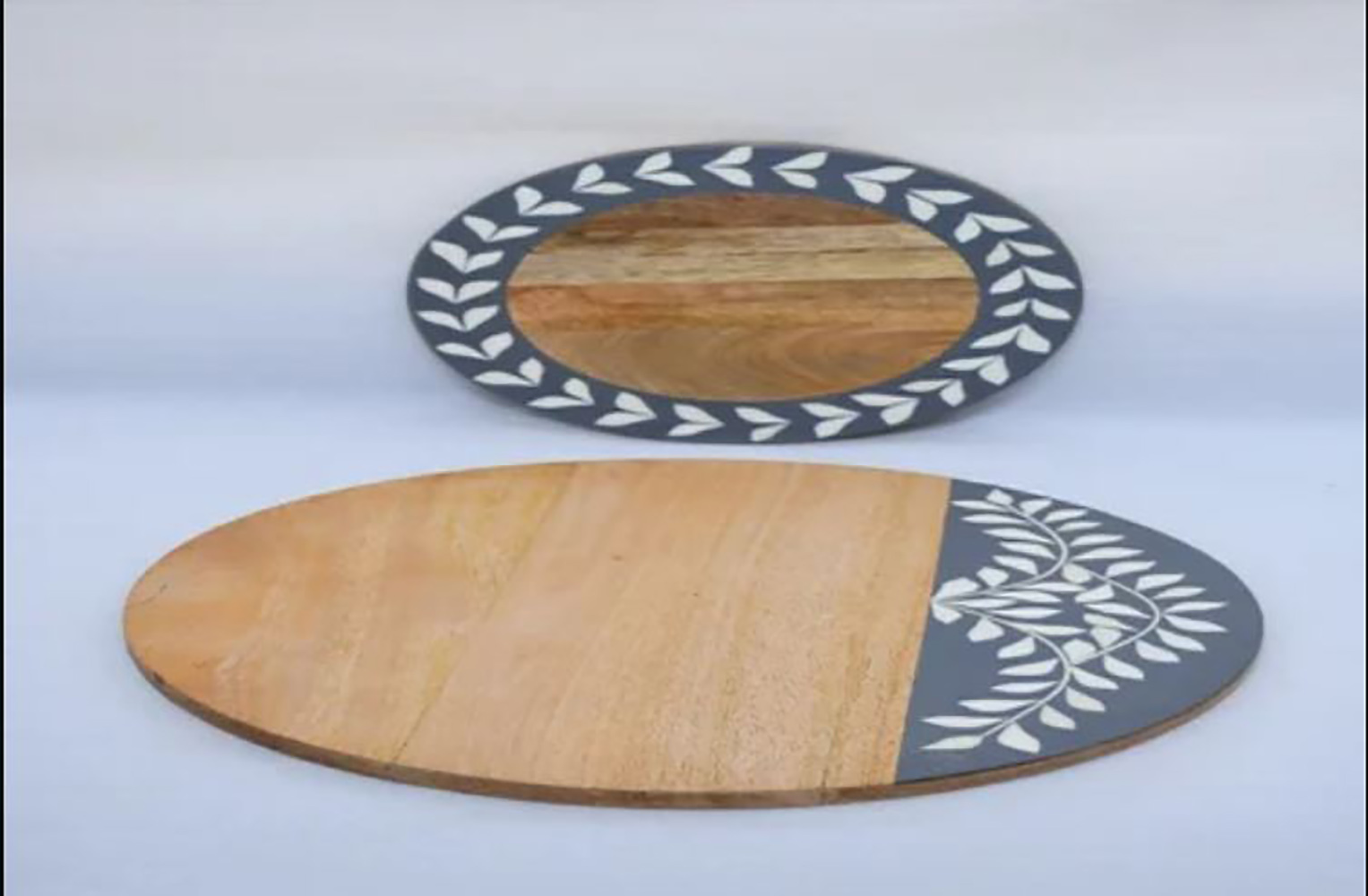
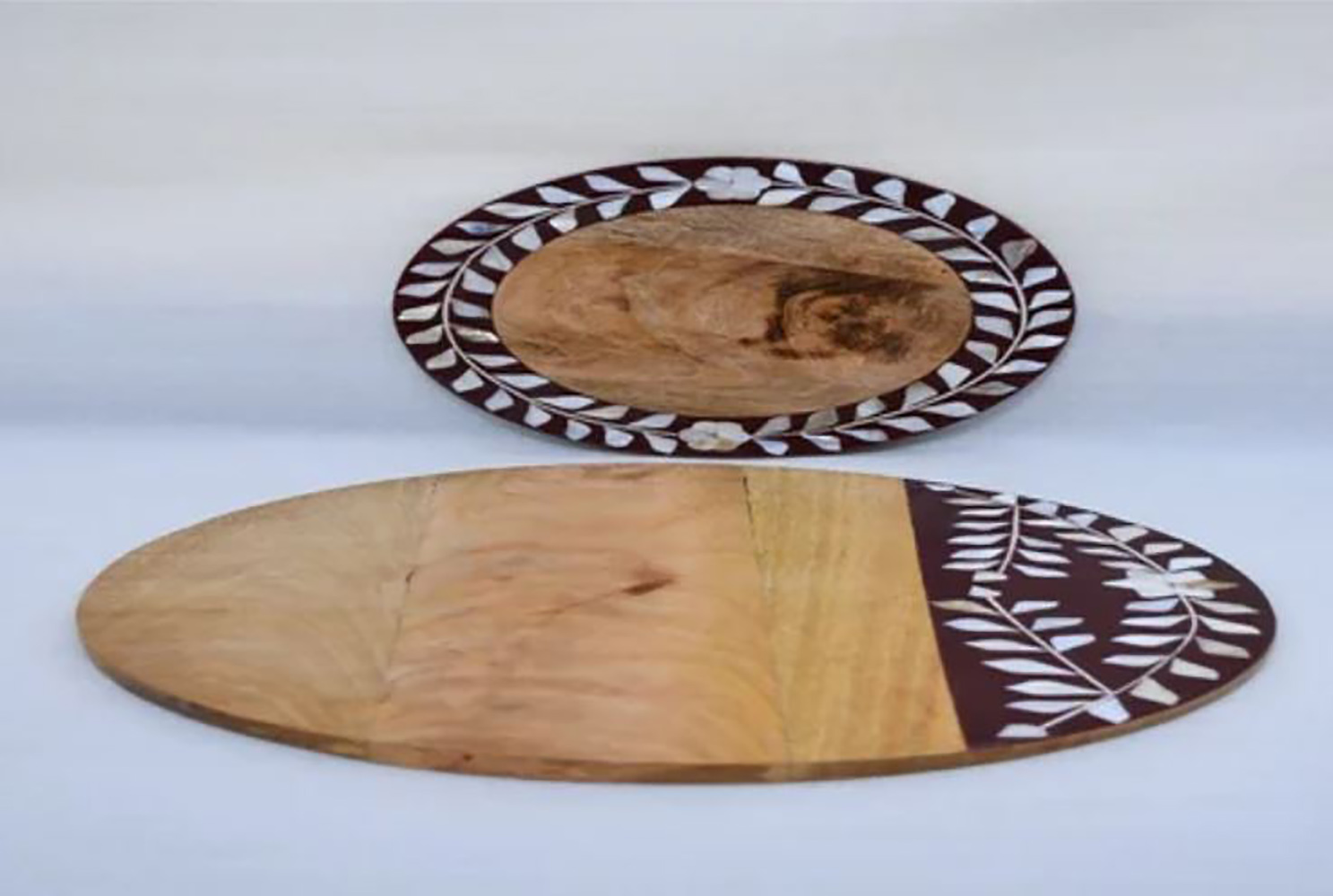
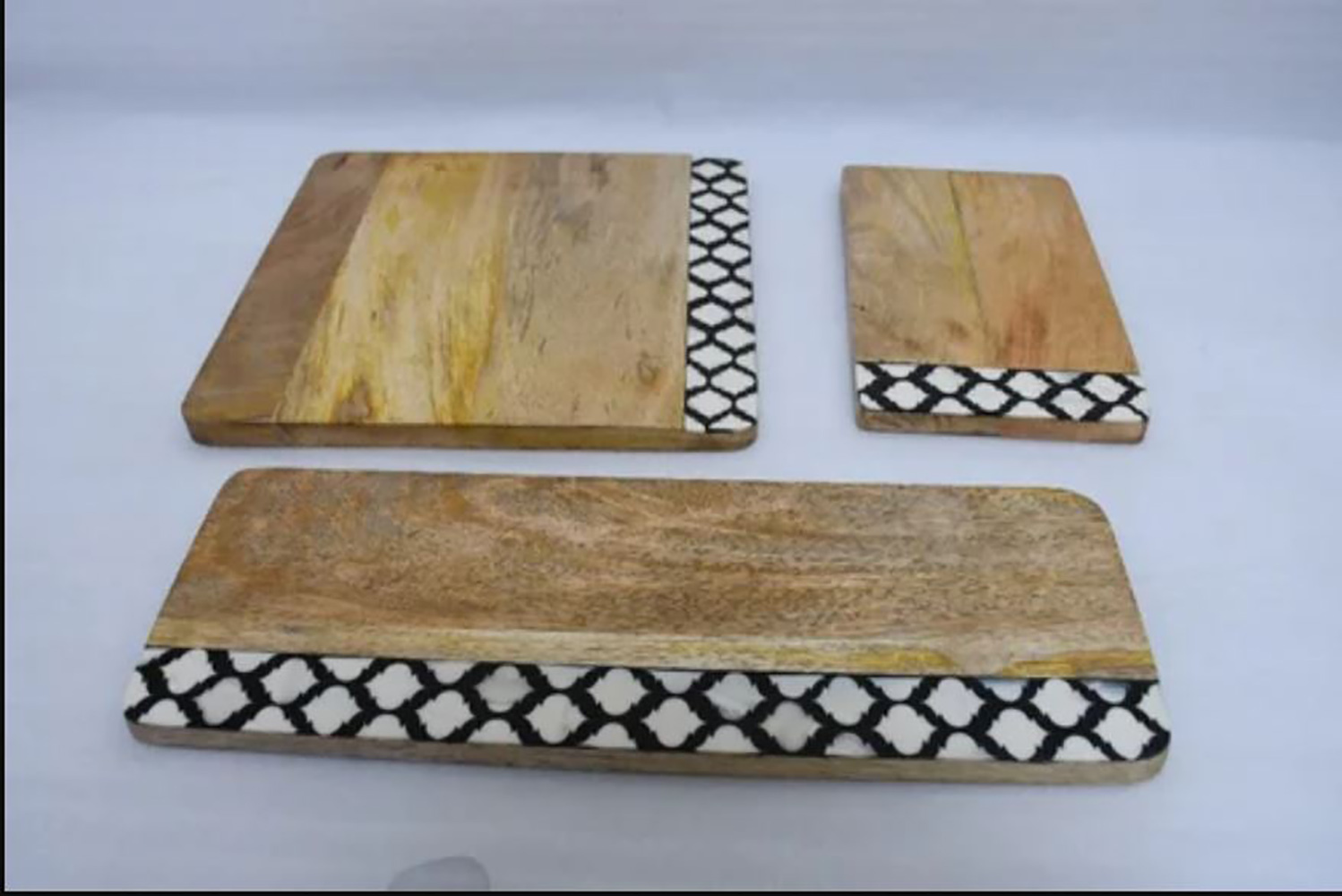
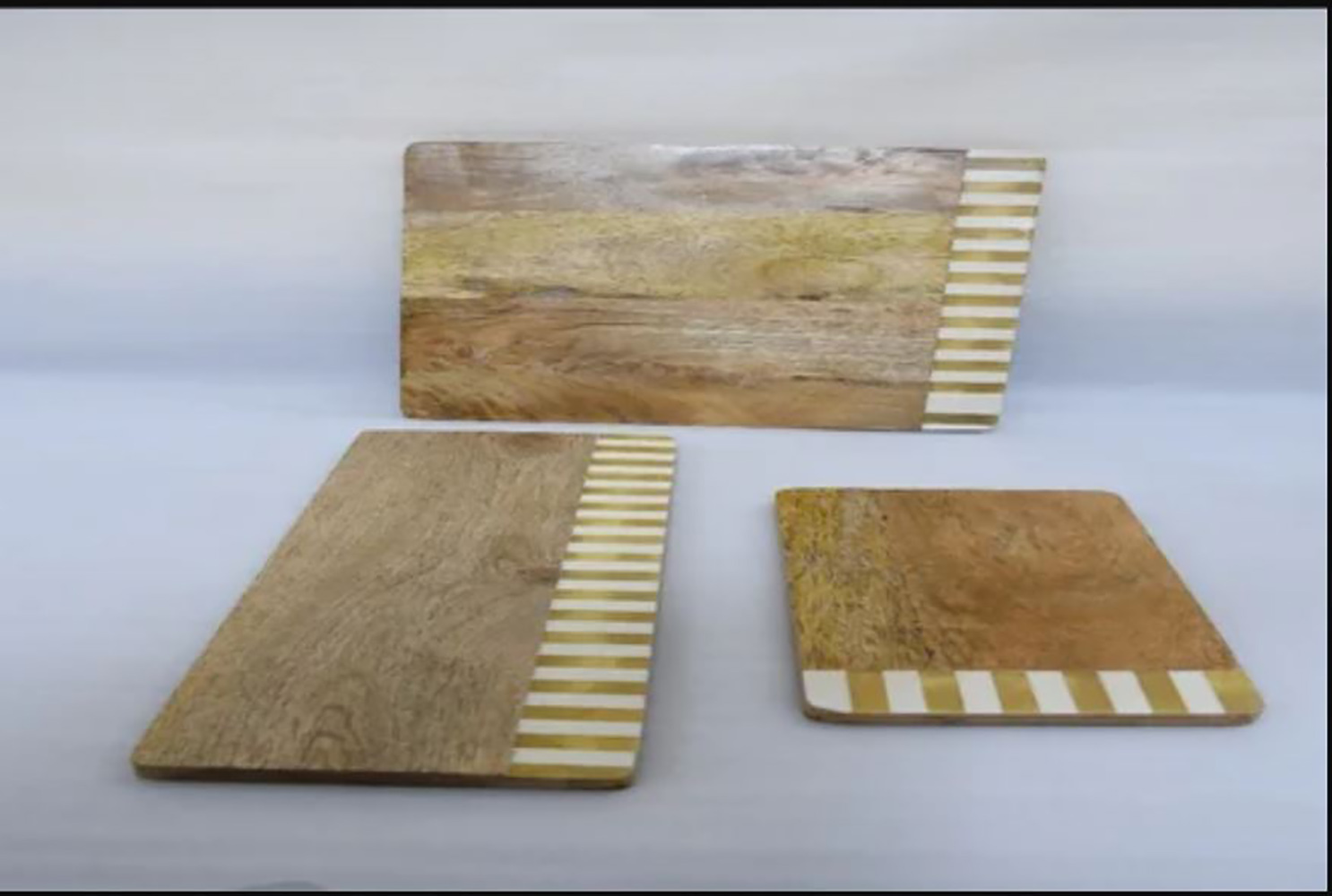
About Large Wooden Serving Tray
Material:Typically made from a variety of wood types, such as acacia, bamboo, olivewood, or other hardwoods. The choice of wood can influence the plattersdurability, appearance, and maintenance requirements.
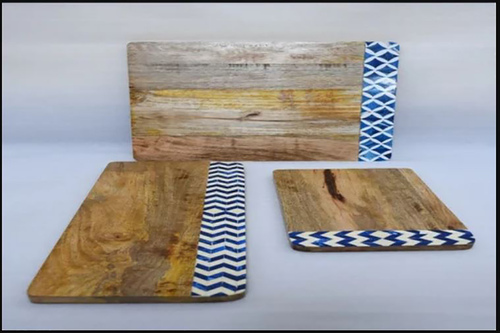
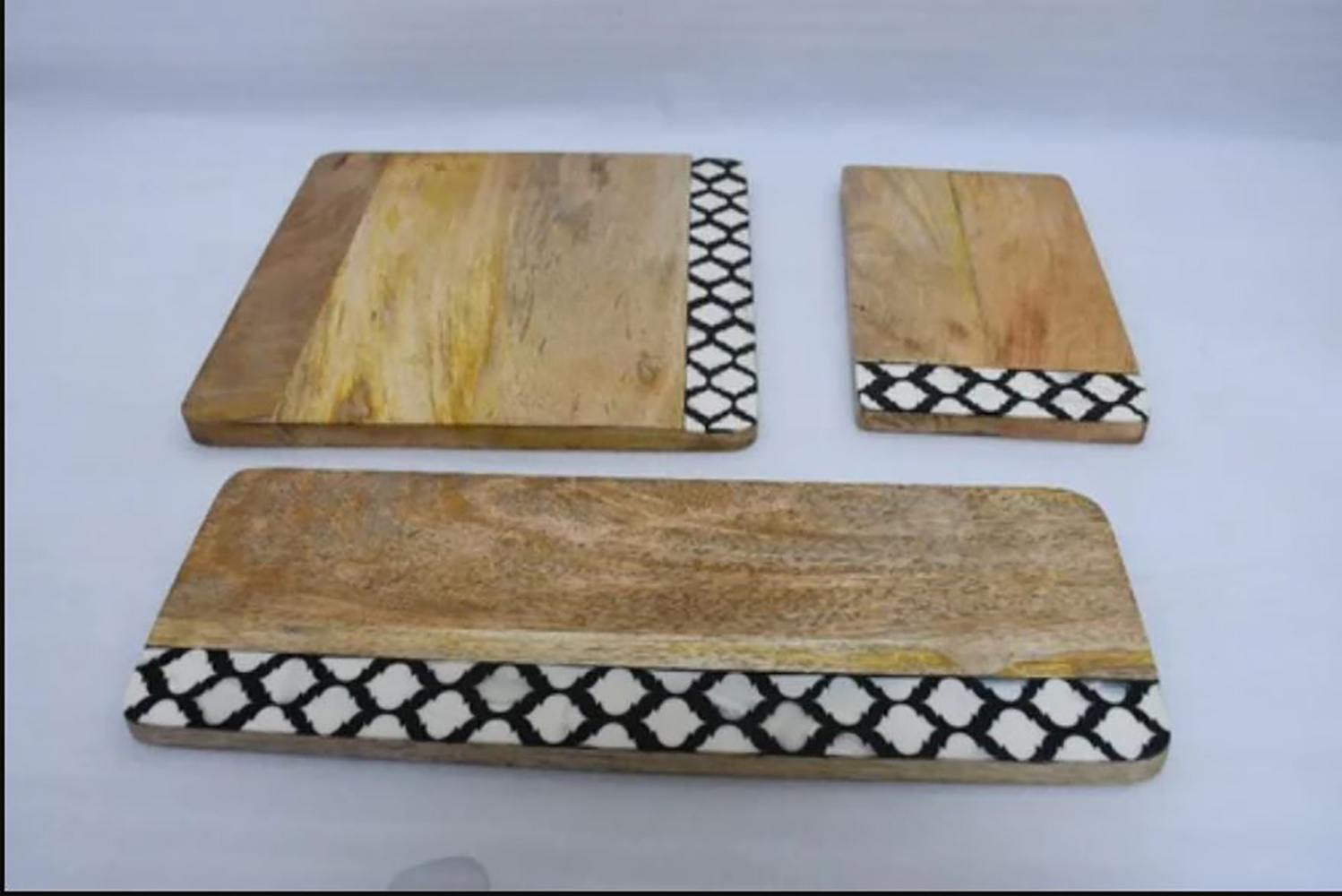
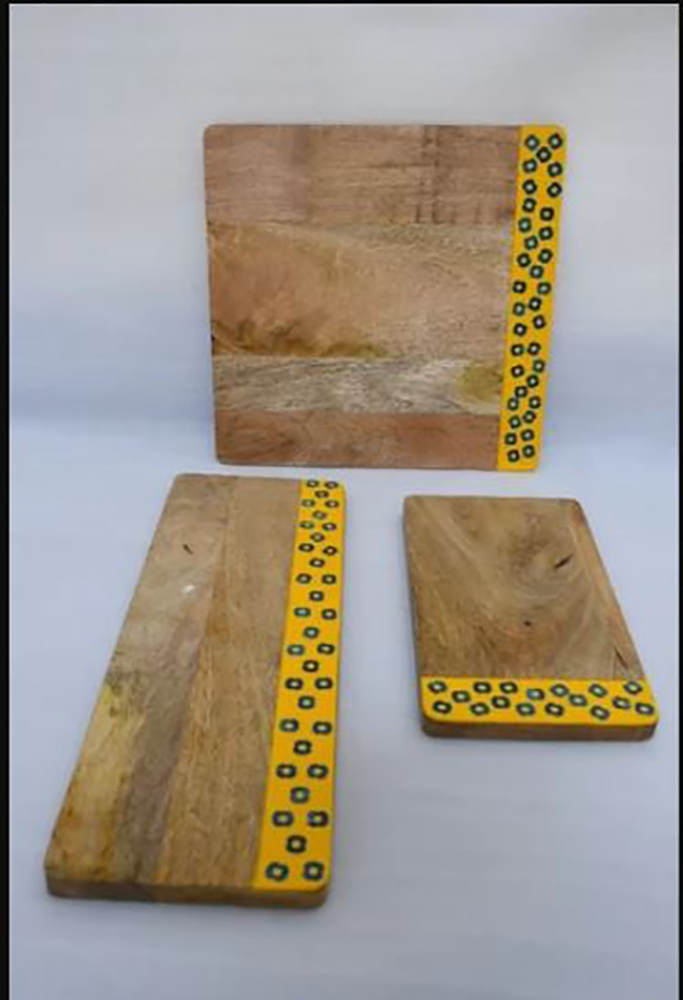
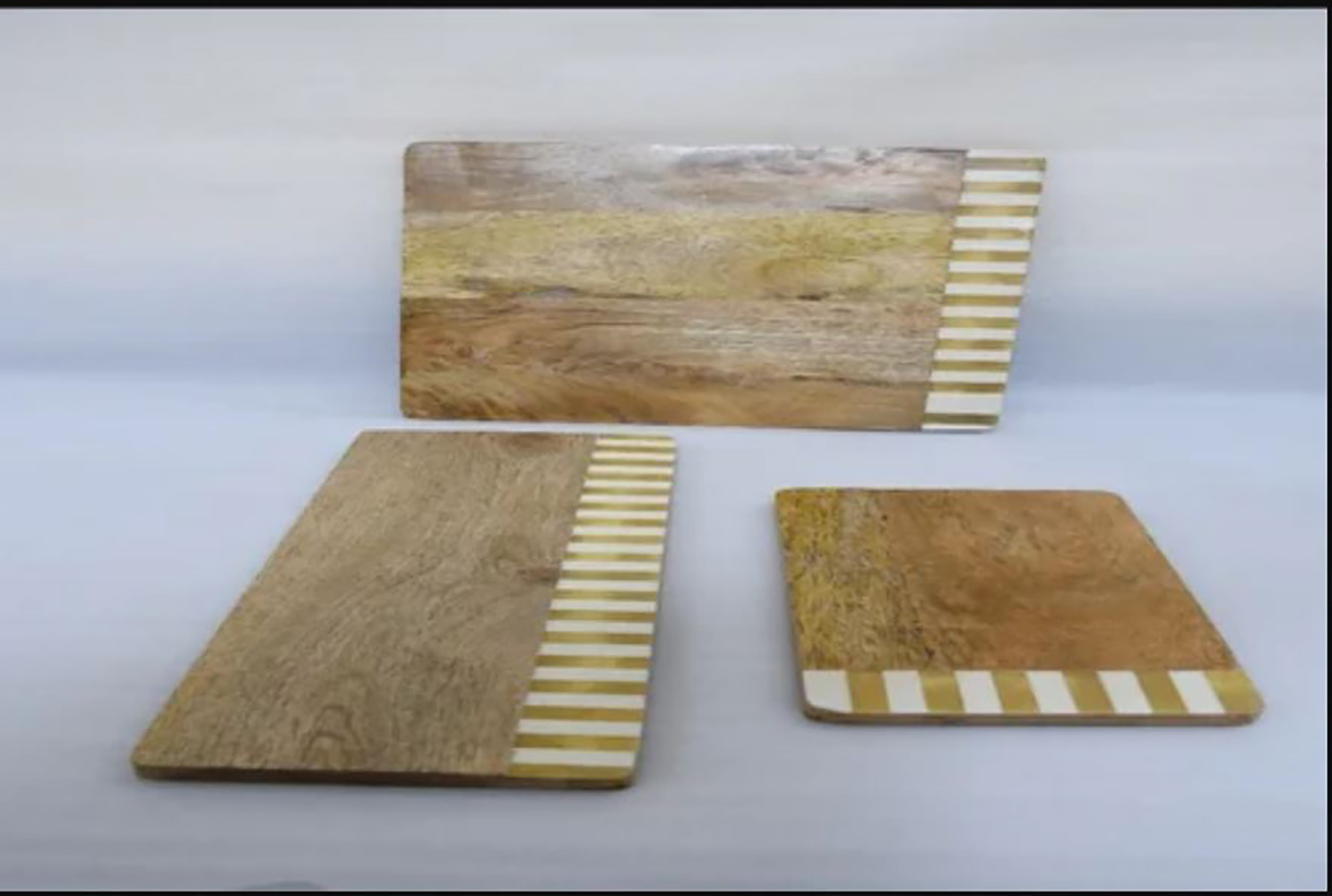
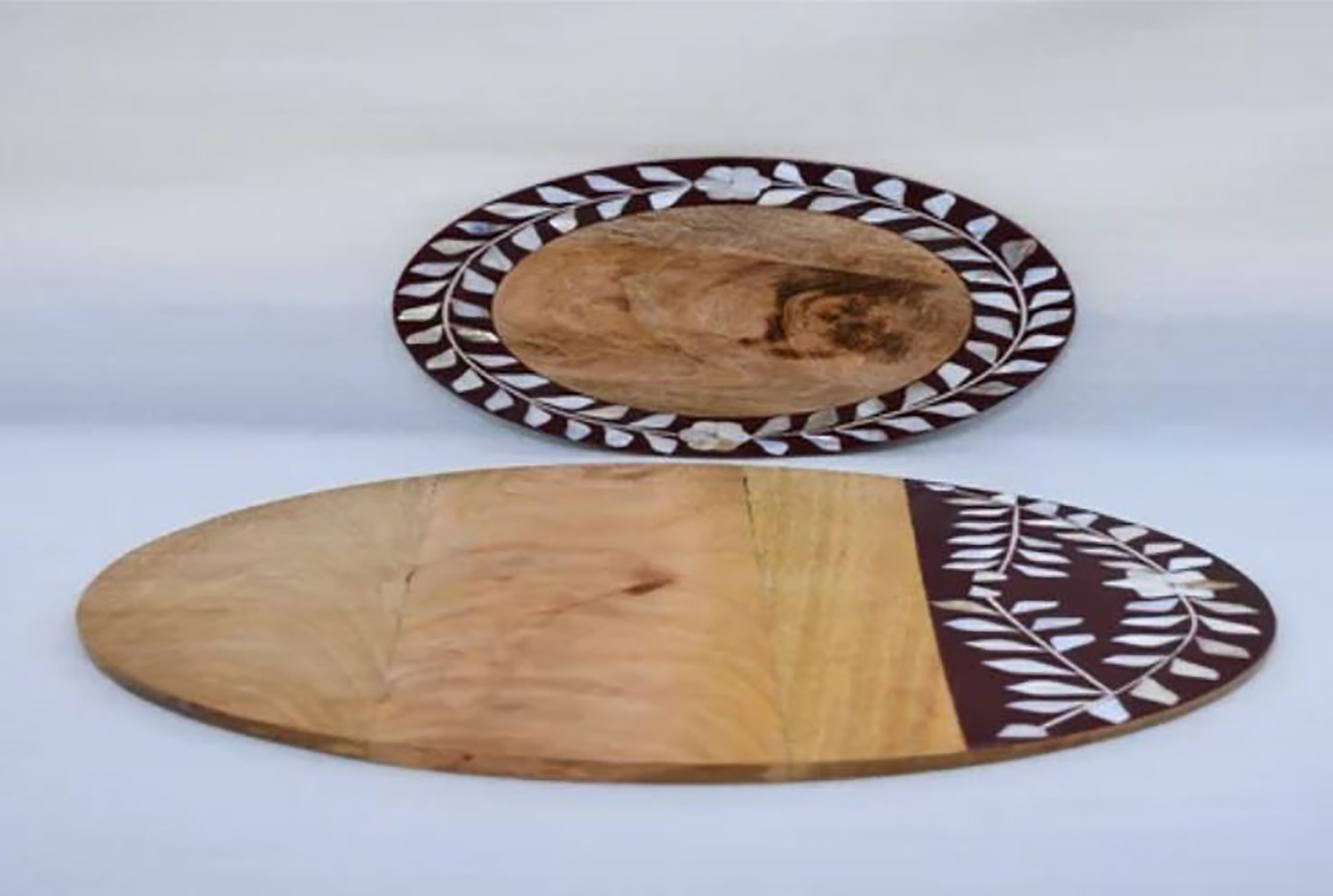
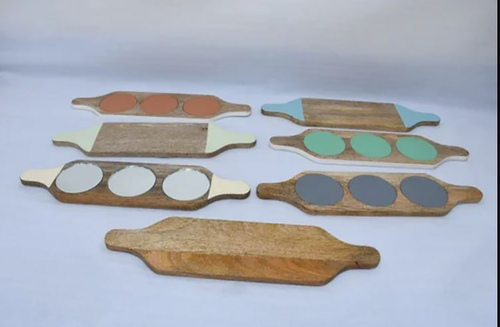
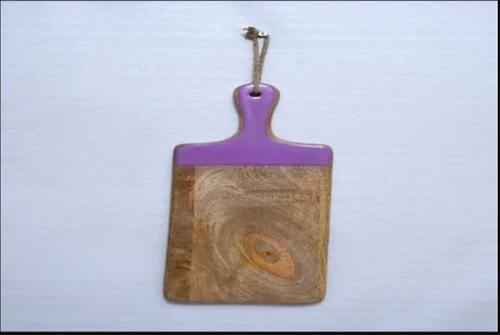
Woodenplatters are crafted by shaping and smoothing the wood to create a flat, evensurface. Some may have raised edges or handles for easy carrying.
Thesurface of the wooden platter may be treated with food-safe finishes, such asmineral oil or beeswax, to enhance its appearance and protect the wood. Thisalso makes the platter more resistant to stains and odors.
Wooden platters are versatile and can be used for serving a variety of foods,including cheeses, charcuterie, fruits, bread, and more. They are popular forentertaining guests and adding a touch of natural elegance to table settings.
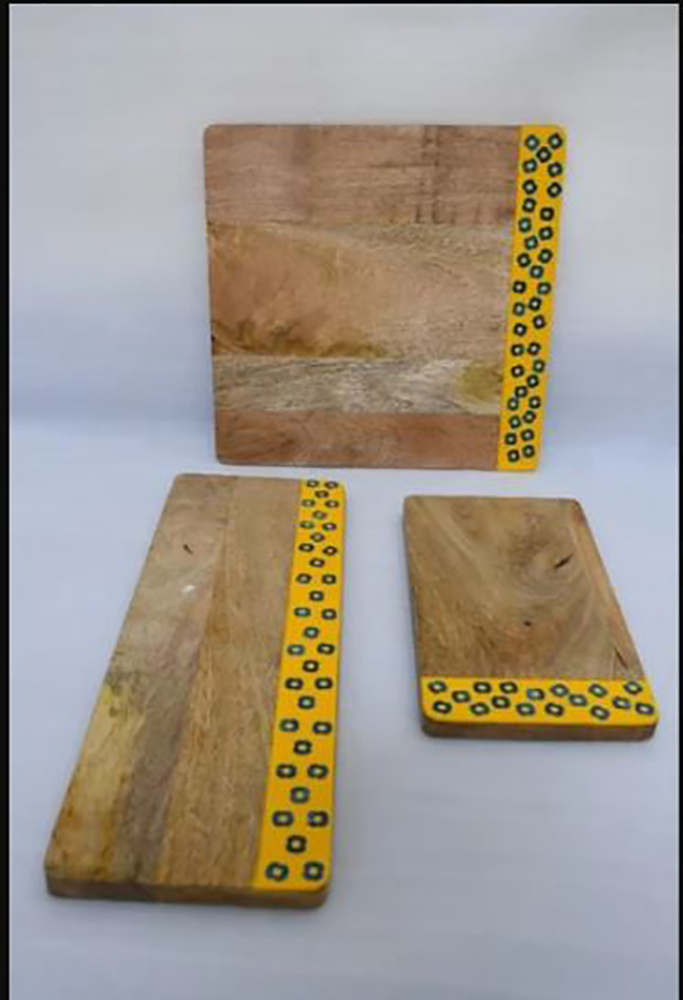
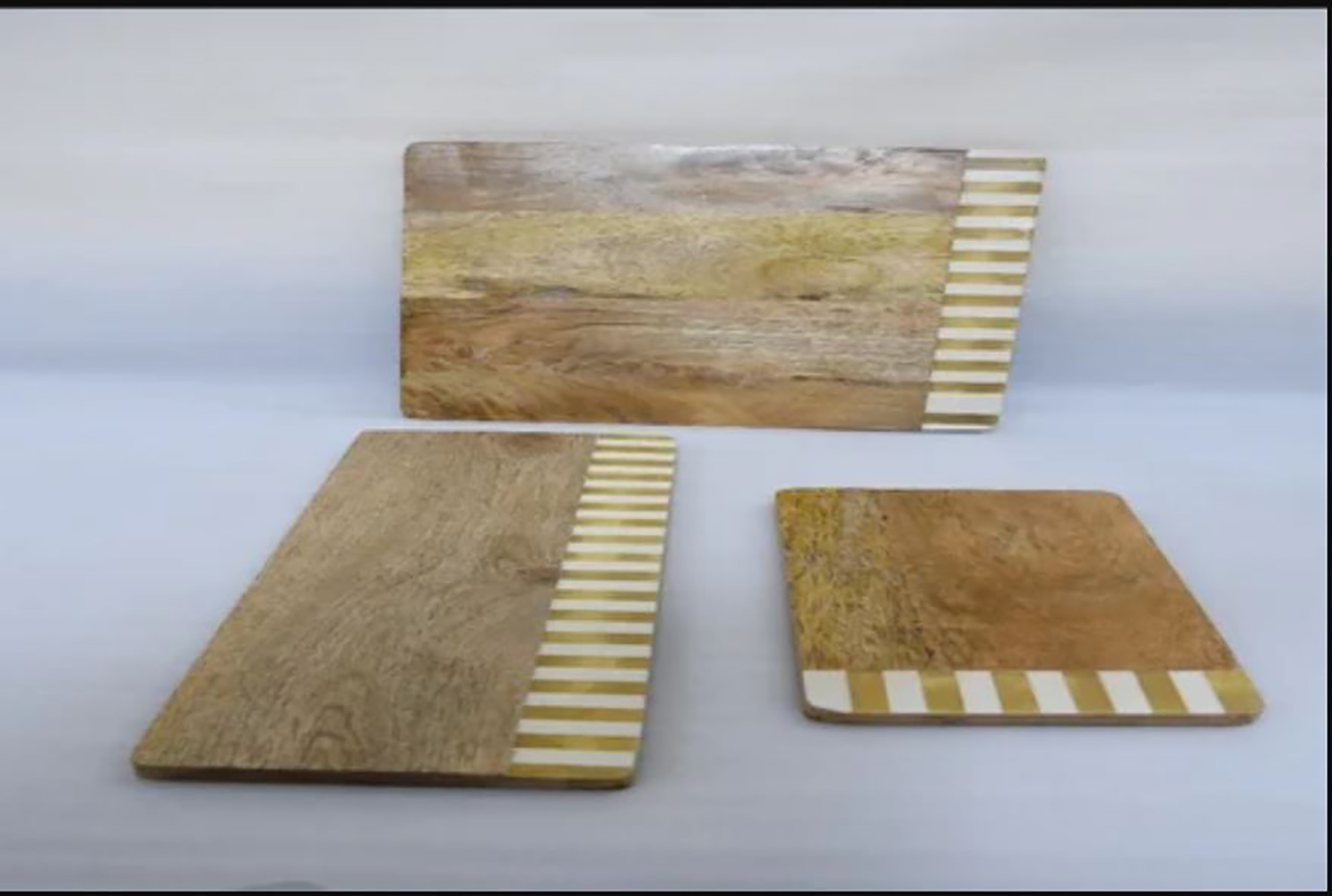
Thenatural grain and color variations of the wood contribute to the aestheticappeal of wooden platters. They can range from light and pale to dark and richtones, providing a warm and inviting presentation.
Wooden platters require special care to maintain their appearance and preventdamage. It is essential to hand wash them with mild soap and warm water,avoiding prolonged exposure to moisture and extreme temperatures.
In addition to their functional purpose, wooden platters oftenserve as decorative items in kitchens and dining areas. They can complementvarious styles, from traditional to modern, and add a rustic or natural touchto the decor.
EnvironmentallyFriendly: Choosing wooden platters made from sustainably sourcedmaterials supports environmentally friendly practices. Many manufacturersprioritize using responsibly harvested wood to minimize their impact on theenvironment.
Eco-Friendly CraftsmanshipHandcrafted from carefully selected sustainable wood, this tray reflects environmentally conscious manufacturing. Its eco-friendly attributes make it a responsible choice for those who value green living, ensuring utility without compromising on environmental ethics.
Durable and Practical DesignEngineered to resist scratches and stains, this tray offers exceptional durability. The raised edge design prevents accidental spillage, while integrated side handles enhance handling. Its ample size accommodates multiple dishes and cups, making it perfect for serving guests or family.
Easy Maintenance and StorageThis tray requires minimal maintenancesimply wipe clean with a damp cloth and condition periodically with oil for best results. Stackable by design, it is easy to store and helps save space in busy kitchens, cafs, or catering setups.
FAQs of Large Wooden Serving Tray:
Q: How should I clean and maintain this large wooden serving tray?
A: To maintain the trays natural luster and durability, wipe it clean with a damp cloth after each use. Regular oil conditioning is recommended to keep the wood hydrated. Avoid soaking in water or placing it in the dishwasher, as this can damage the finish.
Q: What type of dishes and beverages is this tray suitable for?
A: The tray is designed to serve a variety of foods and beverages, including snacks, breakfast items, tea, coffee, and appetizers. Its raised edges allow for stable transportation of multiple dishes or cups without risk of spillage.
Q: Can I use this tray for serving hot items?
A: Yes, the tray is moderately heat resistant and suitable for serving hot dishes, withstanding temperatures up to 80C. However, it should not be used in microwaves or ovens.
Q: Is this tray safe for commercial settings like restaurants or cafs?
A: Absolutely. Its robust construction, easy maintenance, and large capacity make it ideal for high-traffic environments such as hotels, restaurants, kitchens, and cafs.
Q: Does the tray require any assembly after purchase?
A: No assembly is required. The tray arrives ready for immediate use and features integrated side handles for convenient serving.
Q: What are the sustainability benefits of this serving tray?
A: The tray is handcrafted from sustainable, responsibly sourced wood, making it both eco-friendly and recyclable. Its reusable nature reduces single-use waste, and the production process underscores a commitment to sustainability.


 Send Inquiry



 Send Inquiry
 Send Inquiry
 Send SMS


 English
 Spanish
 French
 German
 Italian
 Chinese (Simplified)
 Japanese
 Korean
 Arabic
 Portuguese